
By Kinga Fraczkiewicz
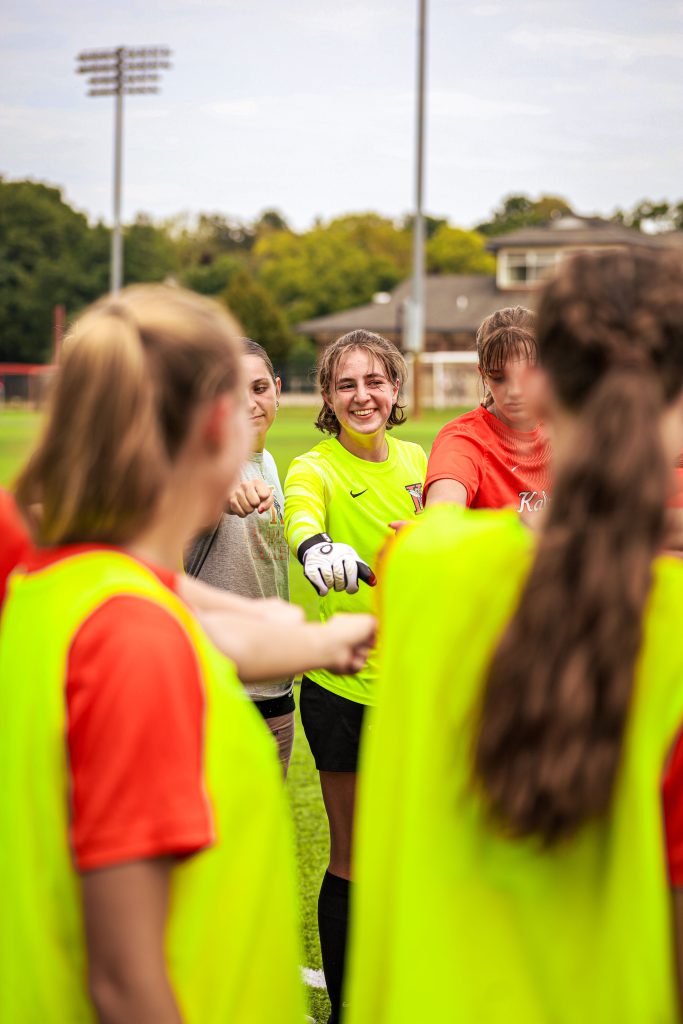
Daily practice, weekly games, and frequent weightlifting take up significant amounts of time for college athletes, on top of studying for three classes and participating in extracurricular activities.
Jessica Forbis ‘28 plays soccer for K college and plans to declare a double major in French and Philosophy.
Forbis and her team begin to practice one month before the beginning of classes. The two practices a day are intense to prepare them for the season. The training is interspersed with team-building activities, such as team dinners and skirmishes with other colleges.
“Early on in the season there tends to be a lot more conditionaling workouts incorporarated into the practice compared to later in the season,” says Forbis.
The soccer season starts in the fall with a series of conference games; the successful teams then play against each other in the MIAA tournament to determine their overall ranking. Games are bi-weekly, usually with one taking place during the week and one on the weekend.
For away games, the team travels an average of two hours by bus, and they are not allowed to do their homework so that they can focus on the game and be present with their team.
“I think my coach does it to encourage us to focus on the game ahead of us. I certainly respect and appreciate my coach’s reasoning because I know she has the best interest of the team in mind,” says Forbis. Depending on the time of the game, Forbis will leave before or during class, catching up on the missed work before the next class.
On a game day, Forbis will get up around 6 a.m. to be ready for her 9:40 a.m. classes. During game day, they do not have practice and will have lighter practice the day before so that the soccer players are not overexerting themselves during game days. After classes and not long before the game, Forbis and her team will gather in the Athletic Center to get ready and hyped for the game.
One hour before the game, Coach Jill Leibforth will go over the game plan, and they will have their pregame talk. After that they warm up before the game starts in the evening.
After 45 minutes of play, the team will rest and go over the game plan during the 15-minute half-time break and then play for another 45 minutes. Once the game ends and the teams have shaken hands, the coach will go over what went well and what needs improvement with the team before they can celebrate or rest at home.
College athletes are expected to attend every training session and game, while also maintaining a 3.2 gpa, doubling the stress of midterms.
Service is part of the Kalamazoo College Athletics mission, so each team volunteers for the community as a way of giving back to the local Kalamazoo community. Earlier in the trimester, the women’s soccer team volunteered at a pancake breakfast event for Alexis Nesbitt, the Assistant Coach, and an EMT. “It’s more about the number of volunteering events rather than hours, and I believe each team aims to do at least one event each trimester,” says Forbis.
The classroom expectations coupled with the specific expectations of college sports cause stress and hardships for college athletes. “The nice thing about being an athlete is leaning on teammates and having that community because everyone on your team is going through the same thing, is dealing with similar stresses, so it’s nice to have each other to lean on,” says Forbis.
Leave a Reply